



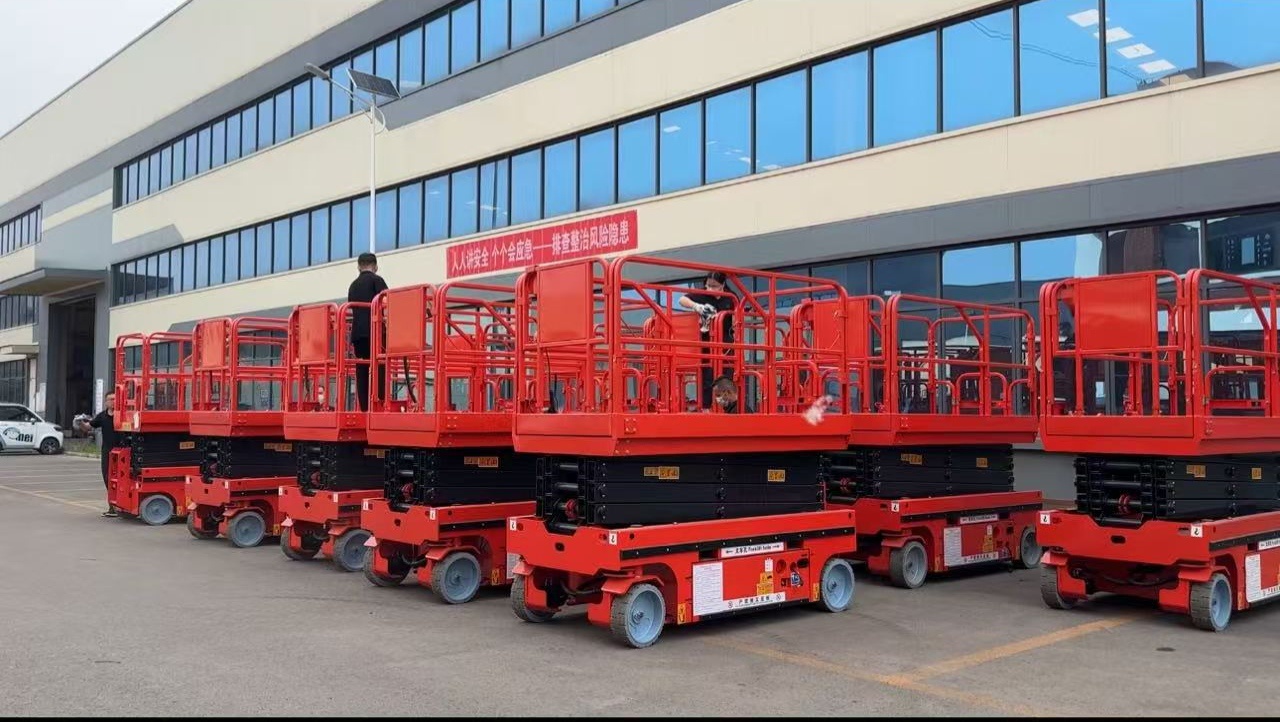
1、 Structural principle: The basic structure of a scissor lift is an "X" - shaped articulated arm (also known as a "scissor"). Multiple X-shaped structures are vertically stacked. When lifting, the hydraulic cylinder pushes the scissor arm to unfold, causing the work platform to rise vertically; When descending, the hydraulic oil leaks back, and the scissor arm contracts and resets by its own gravity. When lifting, it relies on hydraulic pressure, and when lowering, it relies on gravity and hydraulic pressure for gradual descent. This is an important characteristic that distinguishes it from other boom trucks.
2、 Core advantages
Simple structure and low procurement cost: Compared with curved arm elevators and straight arm elevators, the scissor type mechanical structure is the most mature, and the price is significantly lower at the same operating height. For example, the purchase price of a domestically produced 8-meter self cutting fork is around 50000 to 80000 yuan, while the price of a curved arm car of the same height often doubles or even higher.
Easy maintenance and low usage cost: The parts have strong universality and low maintenance technology threshold. Whether it is hydraulic cylinders, oil pipes, tires, or electronic controls, universal parts can be found in the market. Daily maintenance is nothing more than changing hydraulic oil, checking batteries and tires, and the cost is very low.
Large platform area and high work efficiency: Scissor type work platforms can usually reach a height of 2 meters by 1 meter or more, allowing 2-3 people to stand at the same time and carry tools and materials, which is very practical for scenarios that require multiple people to work together.
Easy to operate and quick to learn: The control logic is much simpler than that of a curved arm/straight arm (mainly for lifting and walking), and new employees can learn it in half a day after training, greatly reducing labor training costs.
Hot Prodcts
Online Message
