



News
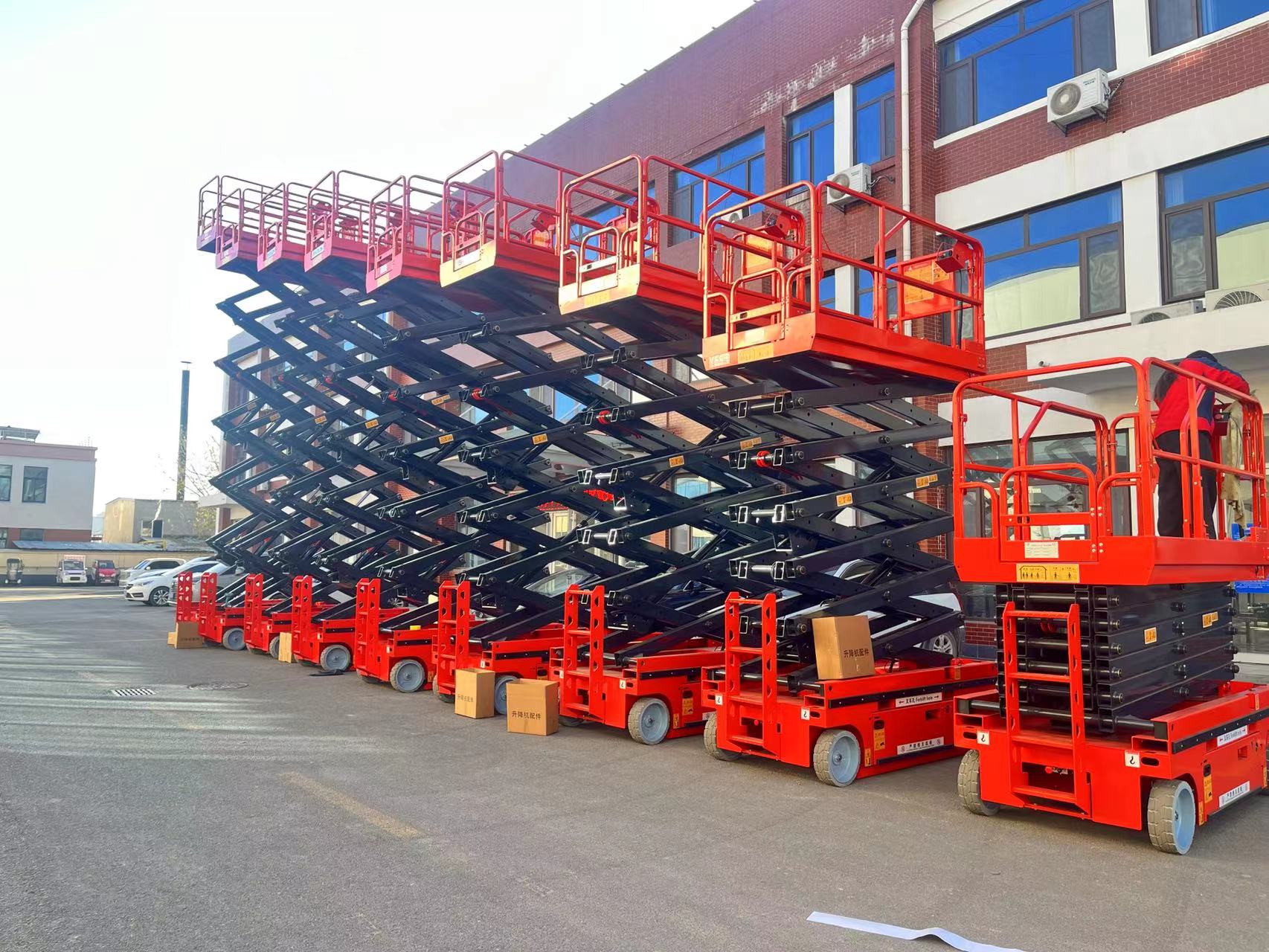
Pre-operation Inspection
Operators must receive professional training and be familiar with equipment operation. Untrained personnel are not allowed to operate.
Check the whole machine before use: guardrail, scissor arms, tires, hydraulic hoses and cables for damage or oil leakage.
Test emergency stop, lift/lower, drive, tilt alarm and other safety devices to ensure full responsiveness.
Check battery power and hydraulic oil level to confirm normal equipment condition.
Clear the work area, remove overhead power lines and obstacles, set warning zone, keep unauthorized persons away.
The ground must be firm and level. Lay steel plates on soft or potholed ground. Do not lift on slopes.
Operation Rules
No overload or eccentric load. Total weight of personnel and tools shall not exceed rated load on nameplate; load shall be evenly distributed.
Wear safety helmet and harness for aerial work. Attach lanyard only to designated anchor points, not guardrails.
Only low-speed fine adjustment is permitted when platform is raised. For long-distance travel, fully lower the scissor first.
Lift and lower smoothly. No sudden start, stop or sharp turn. Do not shake guardrails violently.
Keep hands, feet and tools away from gaps of scissor arms to avoid crushing injury.
Outdoor work: Do not raise platform when wind speed>12.5m/s, or in thunder, rain and heavy fog.
Prohibited Operations
Do not place ladders or boxes on platform to gain extra height. Do not climb over guardrails.
Do not use the scissor lift as a crane, and no hanging loads outside guardrail.
No operation under alcohol, fatigue or medication.https://www.andalifting.com/
Hot Prodcts
Online Message
